

It’s easy to forget that London is home to truly beautiful, and completely free, green spaces that allow you to escape the city for while. The simple act of stepping into a garden, even for half an hour, can shift the tone of your entire day. A lunchtime wander beneath trees, a quiet bench in the sun with friends, or a peaceful corner to read and reset are small pauses that matter.
The Secret Gardener at Storm Flowers Garden, has created an incredible resource of beautiful gardens to discover all over the UK. With the blue skies of Spring finally upon us, they’ve curated selection of their favourite hidden oases across the capital that are perfect for when you need to find a little calm amongst the concrete…
1. Cannizaro Park, Wimbledon
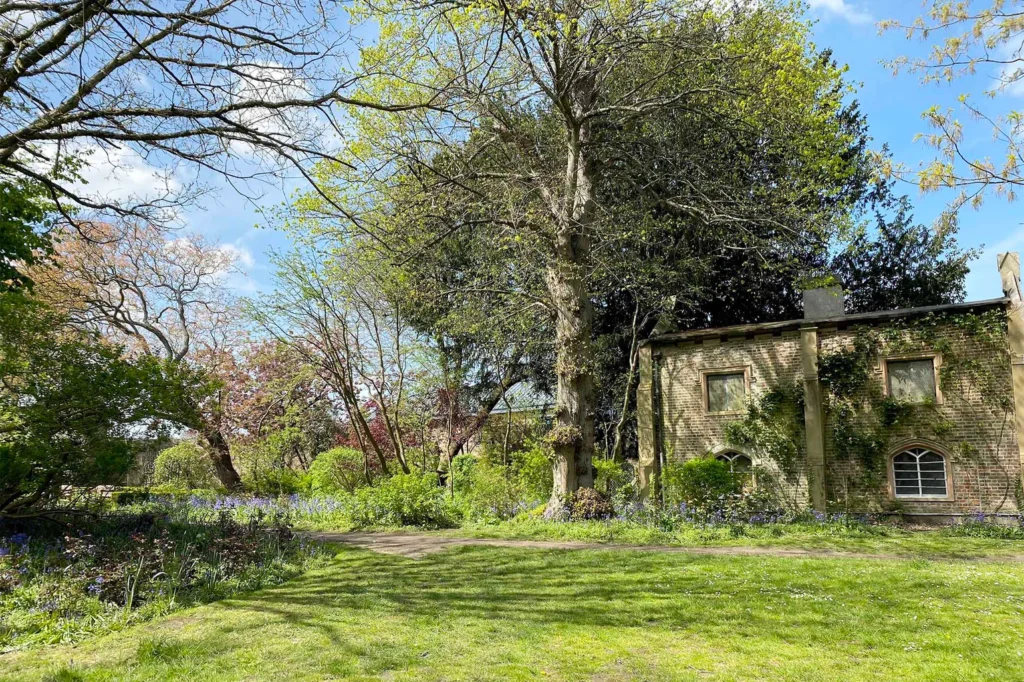
Cannizaro Park is one of London’s most beautiful hidden green spaces. Rich in history, it was once a grand estate owned by the Duke of Cannizzaro, later welcoming notable guests including King George III, Lord Tennyson, Oscar Wilde and Henry James before eventually becoming a hotel. Opened to the public in 1949, the park is now managed by the London Borough of Merton and is celebrated for its rare trees and shrubs, picturesque lake and beautifully designed gardens, including the Rose Garden, Italian Garden and Water Garden. With historic features like the statue of Diana and the Fawn and over 100 labelled trees, Cannizaro Park remains a tranquil, free escape filled with character and natural beauty.
When to visit Cannizaro Park:
Seasonal highlights range from spring crocuses and magnolias to vibrant rhododendrons and fiery autumn maples.
Where to find Cannizaro Park:
35 High Street,
Wimbledon, SW19 4UE
2. Isabella Plantation, Richmond
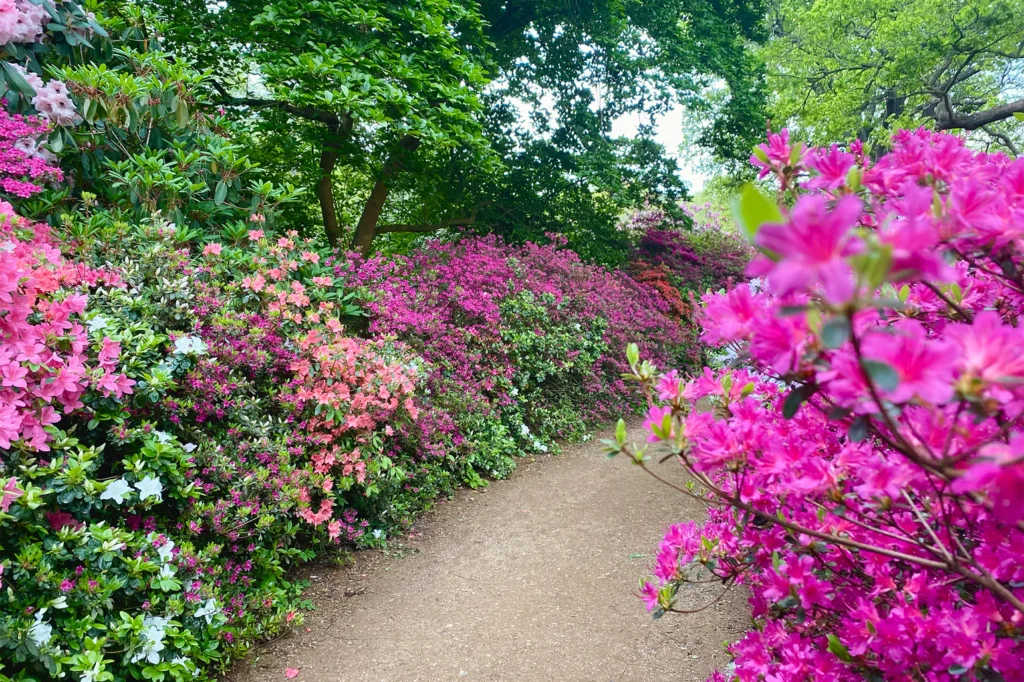
Tucked away within Richmond Park, Isabella Plantation is a 40-acre woodland garden often described as a secret pink paradise. Originally known as The Sleyt, meaning a boggy clearing between woods, the area was planted in the 1830s and later renamed by Lord Sidmouth, who introduced oaks, beech and sweet chestnut trees and fenced it off from roaming deer. Open to the public since 1953, the garden is now celebrated for its breathtaking spring display of rhododendrons, azaleas and camellias. Around the Still Pond, evergreen Kurume azaleas from Japan bloom in vibrant colour, with over 50 rhododendron species and 120 hybrids adding to the spectacle. Bluebells carpet the woodland edges, while streams, ferns and small bridges create a tranquil setting rich in wildlife.
When to visit Isabella Plantation:
Visit in late April or early May to see the garden at its most spectacular.
Where to find Isabella Plantation:
Richmond Park,
Richmond, TW10 5HS
3. Crossrail Place Roof Garden, Canary Wharf
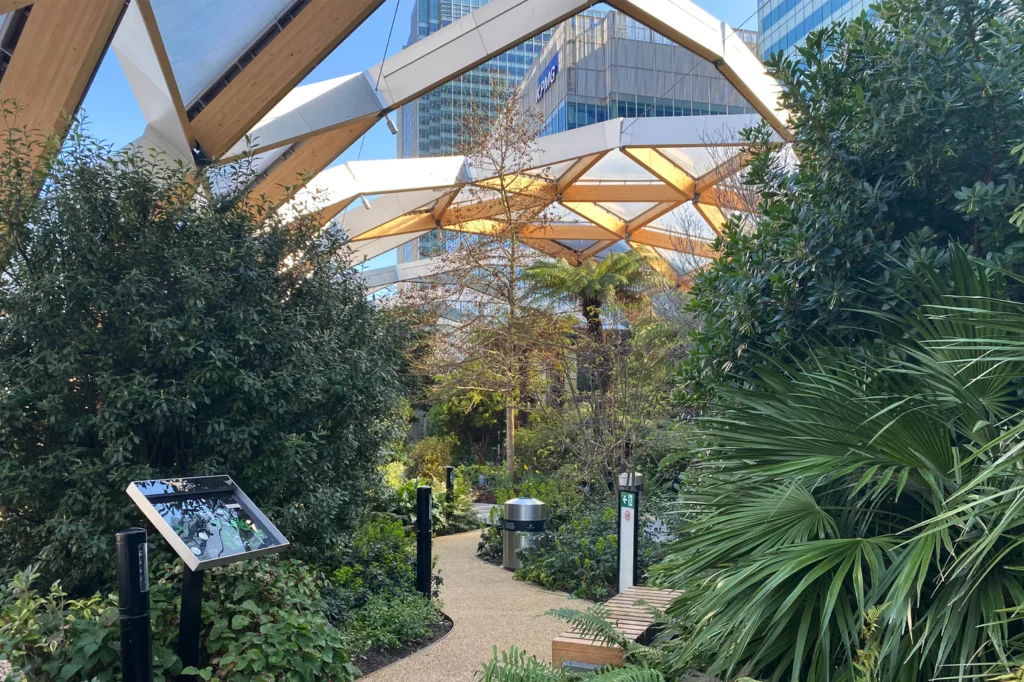
Perched above the Elizabeth line station at Crossrail Place Roof Garden, this hidden rooftop oasis offers a striking blend of architecture, history and global planting. Positioned almost directly on the Prime Meridian, the garden is thoughtfully divided into east and west, with plants from Asia, including Golden Bamboo and Japanese Maple, on one side, and species from the Americas such as Tree Ferns and Sweet Gum on the other.
The site sits on the historic West India Docks, once home to 18th-century merchant ships carrying tropical plants to London, a legacy reflected in today’s lush design. Its distinctive lattice roof was inspired by the Victorian Wardian Case, an early glass container used to transport plants across oceans. Designed by Norman Foster, the 310-metre-long garden is one of London’s largest rooftop green spaces… The same length as the height of The Shard!
When to visit Crossrail Place Roof Garden:
The garden feels livelier between April – September, with more greenery, but because it’s partially enclosed, Crossrail Place Roof Garden offers a sheltered micro-climate for tropical plants year-round.
Where to find Crossrail Place Roof Garden:
Crossrail Pl,
London, E14 5AB
4. Morden Hall Park, South London
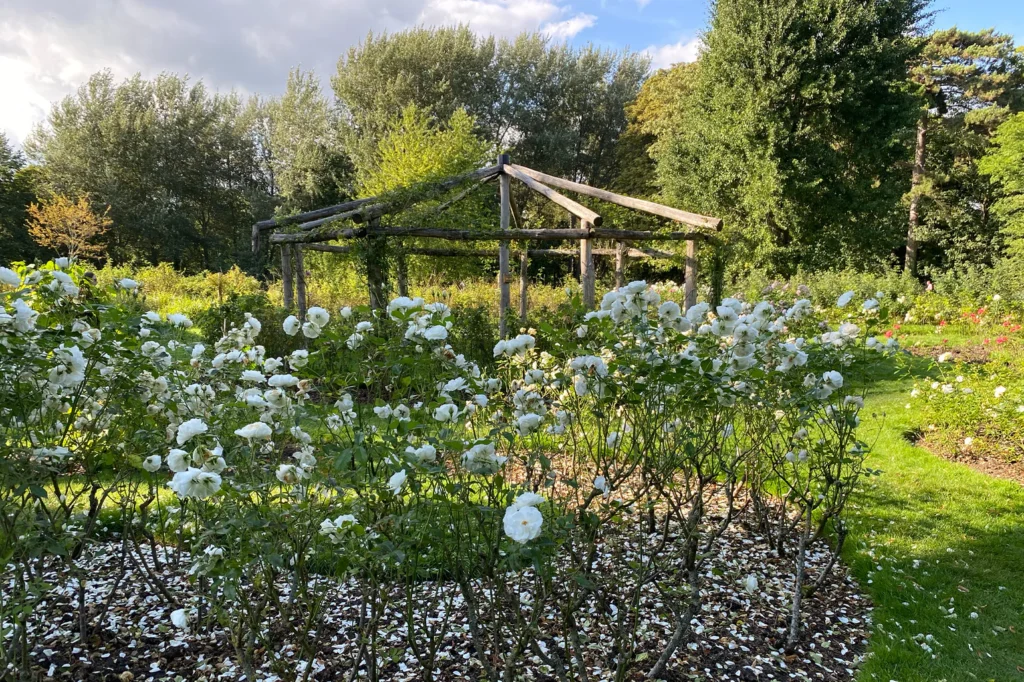
Set along the banks of the River Wandle, Morden Hall Park is a peaceful green escape with a rich industrial and artistic past. Once a country estate, the park was gifted to the National Trust in 1941 and has since become a much-loved public space. At its heart flows the River Wandle, a tributary of the Thames that once powered 90 working mills producing everything from textiles to gunpowder. Its clear waters attracted influential designers like William Morris and Arthur Liberty, whose textile printing took place nearby at Merton Abbey Mills. The conserved waterwheel at the historic Snuff Mill is a reminder of the site’s industrial heritage, while the Wetland Boardwalk offers the chance to spot herons, snipe and other wildlife up close.
When to visit Morden Hall Park:
One of the park’s highlights is the Rose Garden, divided by a gentle stream and once linked by cast iron bridges draped in climbing roses. Late May through July is when the rose garden is most likely to be at its peak.
Where to find Morden Hall Park:
Morden Hall Road
Morden, SM4 5JD
5. The Phoenix Garden, Soho
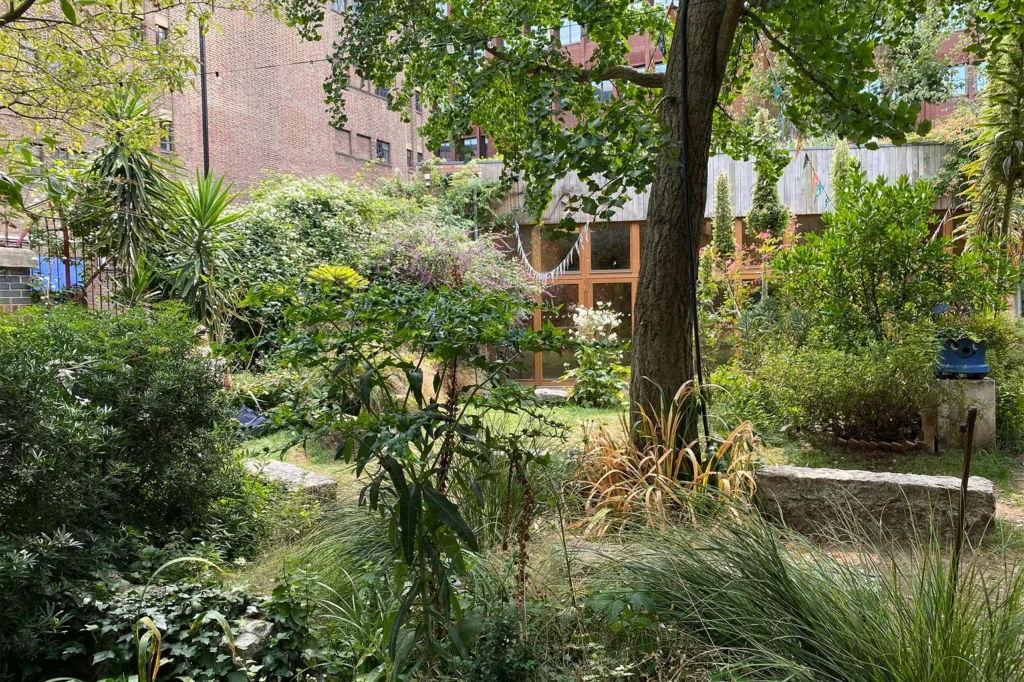
Hidden in the heart of the West End, The Phoenix Garden is a thriving community garden and charity and is a peaceful haven for both wildlife and people. Opened in 1984 and now the last remaining community garden in Covent Garden, it flourishes thanks to a dedicated team of volunteers who care for it year-round. Built on the site of a World War II bombsite, the garden stands as a powerful example of urban regeneration and community resilience.
Sustainable practices, including composting, log piles, nest boxes and a strict no-pesticide policy, encourage biodiversity, with over 15 species of bee recorded and even the West End’s only frogs inhabiting its ponds. Thanks to the urban heat island effect, Mediterranean plants like euphorbia and cordyline thrive here, adding to its unexpected botanical diversity.
The award-winning community building, designed by Gurmeet Sian and completed in 2016, features eco-conscious elements such as a biodiverse brown roof and rainwater harvesting, and hosts workshops and events throughout the year.
When to visit The Phoenix Garden:
Designed as an ornamental wildlife retreat, the garden bursts with bee-friendly blooms such as echinops and salvia in summer, alongside fragrant herbs and productive vegetable beds.
Where to find The Phoenix Garden:
21 Stacey Street
London, WC2H 8DG
6. The Barbican Conservatory
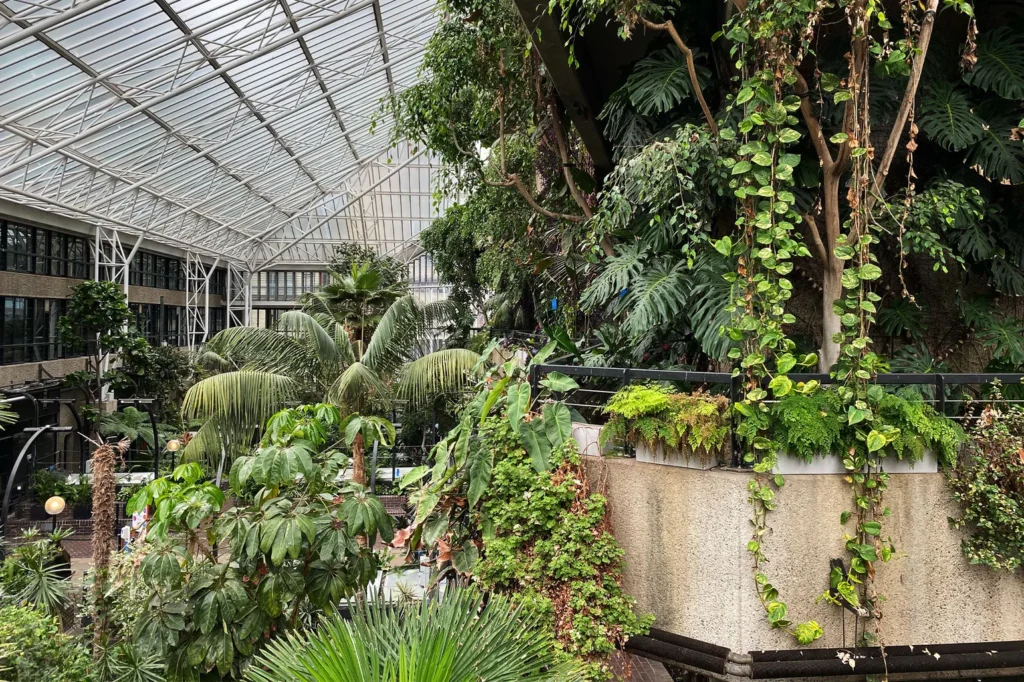
Tucked inside the concrete maze of the city lies Barbican Conservatory: a lush tropical escape hidden within the iconic Barbican Centre. In striking contrast to the surrounding Brutalist architecture, the conservatory offers a calm, green oasis filled with over 1,500 species of plants and trees. It is London’s second largest conservatory, after Kew’s Princess of Wales Conservatory, and was originally designed in 1980 to soften the visual impact of the Barbican’s towering theatre fly tower.
The Barbican Estate itself was built after the Blitz, transforming a bomb-damaged commercial district into a bold post-war residential and cultural complex designed by architects Chamberlin, Powell and Bon. Often divisive in appearance, its raw concrete façades frame one of the city’s most unexpected botanical treasures.
Inside, visitors can wander among tropical foliage, rare and endangered species, and the upstairs Arid House, home to an impressive collection of cacti and succulents. Look out for the resident terrapins in the ponds, relocated here after being released on Hampstead Heath in the 1990s.
When to visit The Barbican Conservatory:
The conservatory is open on Sundays and free tickets need to be booked online in advance. Visit all year round, but the tropical warmth may be particularly appealing on cold and rainy days.
Where to find The Barbican Conservatory:
Barbican Centre
Silk Street,
London, EC2Y 8DS
Discover more of the UK’s Best Secret Gardens here.
Main photo credit: Mara Daniele
About the author