
Best organic meat delivery services in the UK: Plus the genuinely free-range options
A quarter of the smoked salmon produced is consumed at Christmas, and almost all of it is farmed. We sit down with acclaimed fishmonger and restaurateur Caroline Bennett to hear why she’s smoking her own wild-caught salmon this year…
Over the festive period, smoked salmon elevates every dish from scrambled eggs at breakfast to canapes with cream cheese.
“It’s the firm and silky texture with the umami salty flavour that really cuts through, especially when you’ve overindulged at Christmas,” says founder of Sole of Discretion, Caroline Bennett. She set up the ethical fishmonger in 2016, after finding it impossible to source sustainable fish for her London sushi restaurant, Moshi Moshi, which has been established for more than 30 years. So, she knows a thing or two about what makes great salmon.
“If you’re looking for smoked salmon that is a truly luxurious and healthy treat, then the one thing you should ensure is that your salmon is wild,” Bennett recommends.
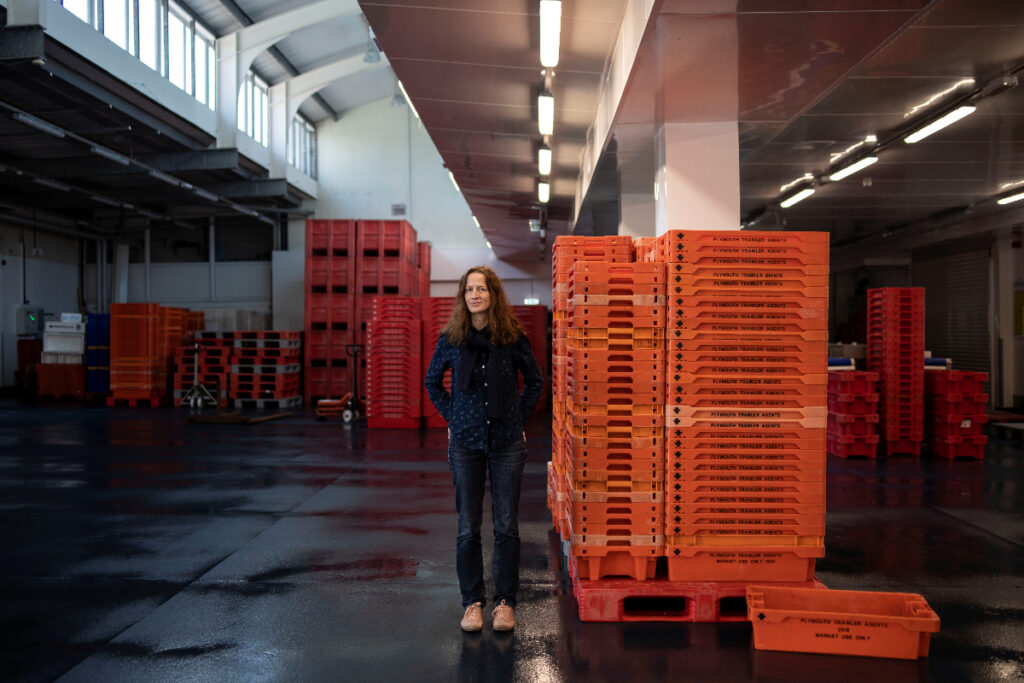
England’s fishmonger, pioneering wild smoked salmon
Bennett began cold-smoking wild salmon in a kiln on Plymouth fish market’s harbourside, last year. She uses oakwood chips and organic sea salt to smoke the fish, following the method she was taught by fellow Slow Food member and expert Sally Barnes, owner of Woodcock Smokery, based in West Cork, who has been doing it for 45 years.
After filleting the salmon, they cure it with salt. The salt is put directly on the skin and tapered to ensure it is evenly spread according to the salmon’s thickness. This creates the important ‘pellicule’ layer, a sheen on the surface which insulates the flesh and seals the moisture inside.
A truly artisanal product, only 30kg of salmon is then cold smoked using at a time. “We are smoking salmon at its prime. We want the flavour of the fish and the taste of the sea to shine through,” says Bennett.
Sole of Discretion also offers hot smoked salmon, which is an additional step in the process. This creates a more jerky-like texture as well as a more caramelised flavour, perfect for a warm salad.
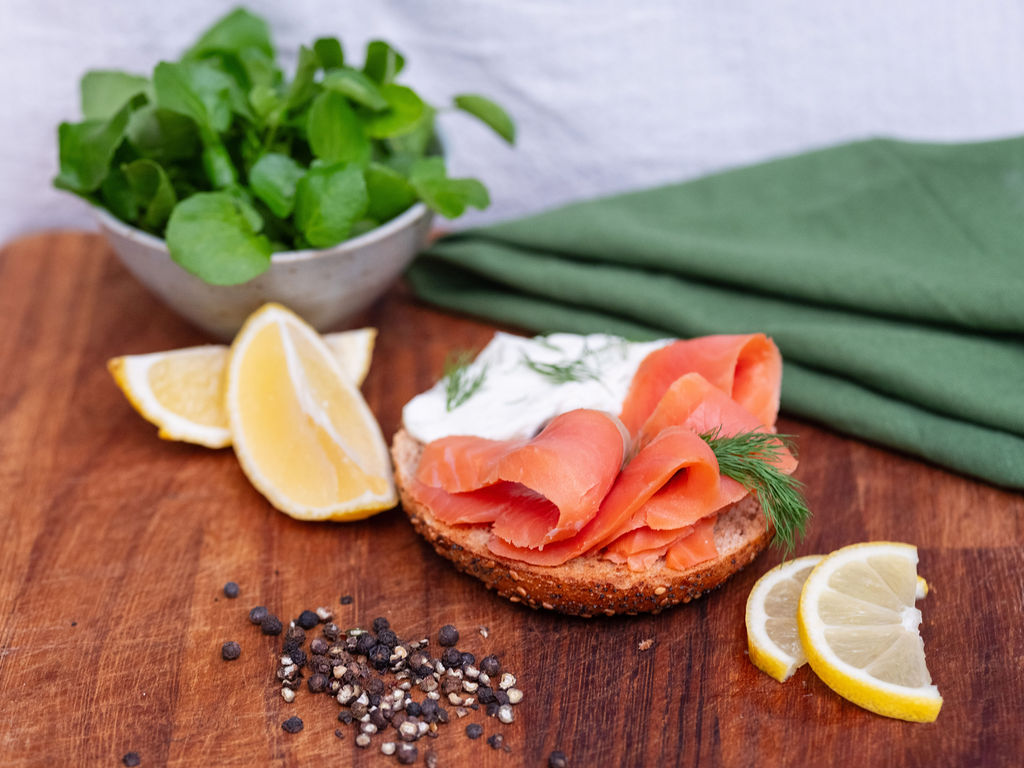
Wild undyed smoked salmon
Different species of wild salmon vary in their breeding and foraging patterns, which affects their texture and tastes. But as a rule, when compared to farmed salmon, it has a denser, firmer flesh. It is also less oily because the salmon are constantly swimming and migrating long distances.
Bennett sources the majority of her Keta salmon from a fisher she is on first name terms with, Tyson, who is based in Juneau, Alaska. She first visited him in 2019 and has been buying from him ever since.
Keta salmon hatch and live in fresh water for three-four months before swimming out to sea. After three to four years they return to the river. It is here Tyson catches them. He uses hook-and-line, which has minimal impact on the wider eco-system, or a gill-net, which has a ‘soak’ time of around an hour to minimise any suffering – in the UK gill-nets are allowed to be out overnight.
Bennett says: “There’s so little wild Atlantic salmon now, most wild salmon usually comes from Alaska or Japan. The fishery in Alaska is brilliantly managed, if enough fish don’t pass through the tributaries during spawning season they simply close and stop fishing to preserve future stocks.”
Numbers of Atlantic salmon have declined by about 70% in Scottish rivers since 2000, according to the charity Wildfish. They estimate there’s as little as 300,000 Atlantic salmon left in the wild and mostly blame the decline on the rise of salmon farming in Scotland.
The benefits of wild salmon
Sustainably-caught wild salmon is better for the environment, and us, in many ways. Firstly, there’s no intensive farming system. “Obviously, in the wild, nature does everything for you. It’s fed the animal, it’s housed the animal – all you have to do it is catch it. Then you’ve got a very sustainable piece of animal protein on your plate,” says Bennett.
And when it comes to health and nutrition, wild salmon is packed with more omega-3 and fatty acids, which are good for your heart and brain, along with vitamins like B-12 and D. It’s leaner in fat, owing to its natural diet and ability to be more active as it’s not in a small cramped pen.
It’s also easy to recognise as it’s a more of a deep orange or red colour. This in contrast to the dyed pale pinky orange of farmed salmon, which has recognisable thick white marbled lines through it. “We’re taught that marbling is a sign of good quality in beef, but this is not the same with salmon,” advises Bennett.
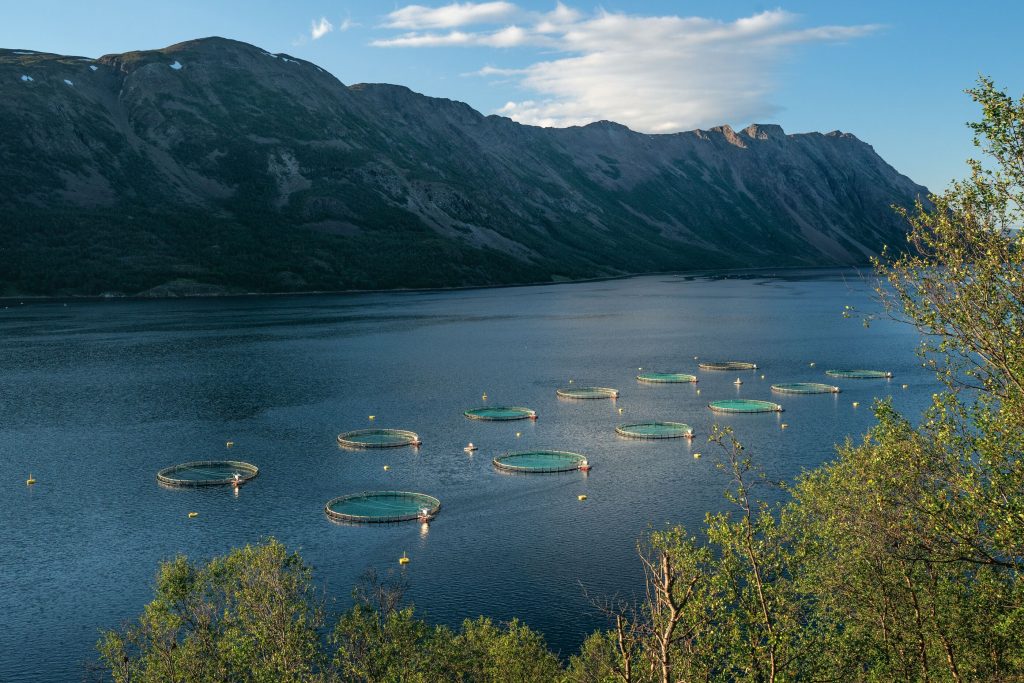
How farmed salmon became the world’s fastest growing food industry
The farmed salmon system only began in the 1970s, but has grown exponentially to become the world’s fastest growing food industry. With it, the problems are growing too.
What’s concerning about farmed salmon is that the murky world of food labelling makes it virtually impossible for shoppers to know what they’re actually buying, with retailers such as M&S insisting: “salmon is farmed responsibly to the highest welfare standards” and that they are “supporting an industry that offers thousands of UK jobs”.
Many of us think buying Scottish seafood supports the UK economy, and is a local, high-welfare luxury food. But, what’s not well known is that not only are most salmon farms now foreign owned, but that the environmental issues are some of the biggest local legacies.
As well as the food and pollutant issues, Wildfarmed estimates 25% of all farmed salmon dies prematurely, largely caused by diseases and warming sea temperatures. “The death rate is extraordinary,” says Bennett. “If you saw any fields of cattle or sheep with so many dead, it wouldn’t be permitted.”
She adds: “I think finally word is getting out there about the devastation the farmed salmon industry causes. I started Sole of Discretion because I wanted to provide solutions. It’s the same reason we’ve started smoking wild salmon: we want to give our customers an alternative. They deserve to feel good about the choices they’re making – that means the product has to be good and the fishers and local processors are better rewarded, too.”
Shop Sole of Discretion wild smoked salmon
Photos in main image: Hanna Collins Photography
About the author