

‘Tourism leakage’: Why that all-inclusive holiday isn’t as inclusive as you think
So, you’re on board with the climate crisis. You’re recycling more. You’re buying slow- instead of fast-fashion. And you’re eating less-but-better meat. But, you haven’t quite cracked slow travel yet. The reasoning comes easy – there’s only so many holiday days in a calendar year. Flying is the cheapest and fastest option. And, well, we deserve this.
But, what if not taking that flight could be one of the most important actions you take, from a carbon perspective? Potentially, above all those other areas you’re putting effort into?
As founder of Ty Cwch, Nigel Humphrey, spells out: “It is not possible to keep within your equitable ‘earthshare’ and fly.” In the last 33 years, his family have flown once together as a family – to Rome. The rest of the time they’ve travelled across Europe by train or car.

Why flying really is that bad
Taking a flight is one of the worst things you can do for the environment as an individual. [1]
Even just flying from London to Rome emits more CO2 than an average person living in one of the 17 least polluting countries emits in a whole year, according to figures from German nonprofit Atmosfair. [2]
Now, there are lots of stats you can read (and that we have read) comparing carbon figures of flights with cars and trains and buses. [3] But, unless you’re carbon-literate, these are not the most helpful to list. What helps is the analysis:
Travel editor and author of Zero Altitude, Helen Coffey [3] gives the figures some perspective:
“Although other modes of transport aren’t perfect either, flying usually trumps them when you add other harmful emissions into the mix, and the industry has barely scratched the surface of decarbonisation while continuing to expand [even post-Covid] at an increasingly rapid rate. There’s a reason scientists say the quickest way to dramatically slash your carbon footprint is to simply stop flying.”
Carbon number expert and author of “How Bad Are Bananas” [4] puts it even more bluntly:
“There is no getting around the need to be frugal with our flying. Don’t believe anyone who tells you otherwise.”
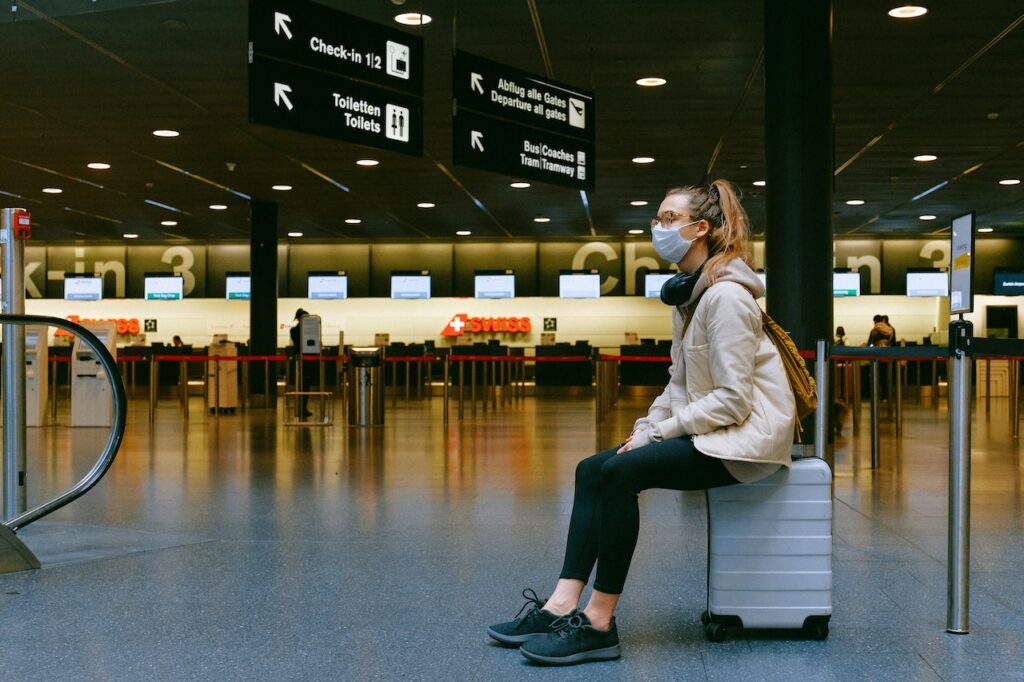
Us and flying: does our flight really make a difference?
In 2024 there were 40.6 million flights and 4.8 billion passengers [5].
Last year, passenger numbers were expected to exceed the five billion mark for the first time – a 6.7% rise compared to 2024 – with airline net profits expected to be $36.6 billion [6].
So, does our little bum on one little seat make a difference? Really?
Well, yes.
More than 70% of those profits are for flights taken in North America and Europe [6].
When it comes to the UK, 70% of all flights taken are taken by just 15% of people – the ‘frequent flyers’. A frequent flyer being someone who takes three return flights a year, according to climate-action charity, Possible. [3]
“Half the UK population never take a flight,” emphasises Mike Berners-Lee.
Globally, it’s a similar picture.
A recent study found just 1% of the population worldwide caused half of all aviation carbon emissions in 2018. [7]
“We think everyone’s on the move, but in reality, just 4% of the world’s population fly internationally in any given year… When we talk about flying, we are really talking about an elite activity,” Stefan Gössling, a professor at the Linnaeus University School of Business and Economics who specialises in sustainable tourism, is quoted as saying in Zero Altitude.
The professor continues:
“What we are really talking about is a small group of people who might have to change their behaviour – it’s not “normal” behaviour when the majority of the world’s population aren’t doing it.”
This is partly why Helen Coffey is reaching her seventh year of no-flying – and she’s a travel editor.
She says: “[This] makes it a climate justice issue, where the poorest carry the can for the lifestyle of the wealthy.”
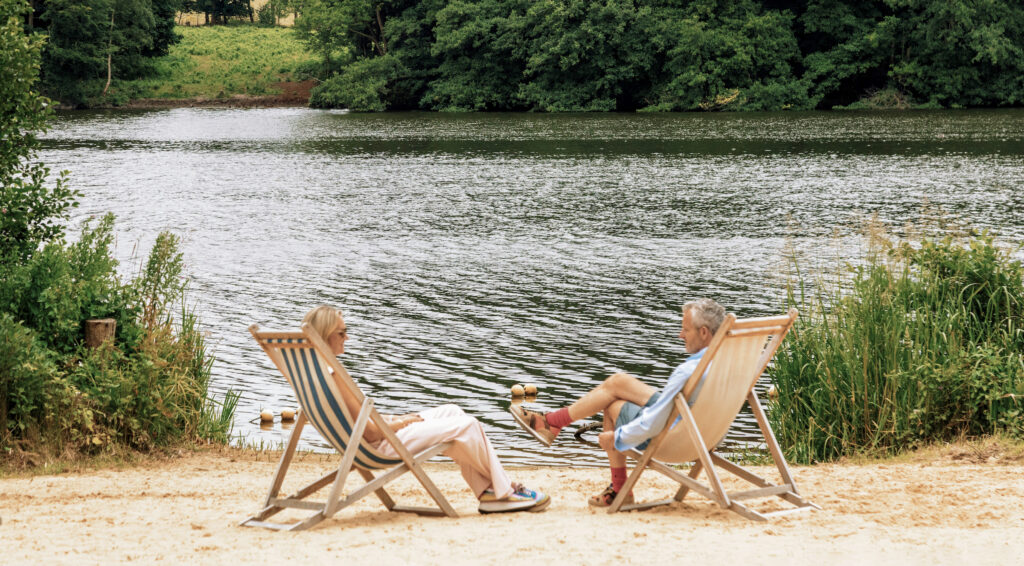
Flying less – but holidaying better?
But, what if not taking that flight doesn’t mean not taking that much-needed holiday?
Not flying requires a mindset shift because, at first, it feels like a sacrifice and more of an effort. But, what if the rewards are greater?
If you’re looking for a change of scenery or pace – then maybe slow travel is just the thing you need.
It could mean staying in the UK, and star gazing in a Dark Sky reserve, forest-bathing in ancient woodlands, or dog-friendly holidays breaks featuring swimming pools or hot tubs and jacuzzis and floating saunas.
If you’re looking for a city break, there’s a striking number of places that are even easier to reach by train than flying – cities across the Netherlands, Belgium and France that keep the journey time to a minimum and a long-weekend absolutely still on the cards.
If you book in advance, train prices are surprisingly comparative to flying. But, there’s no denying that travelling during school holidays or booking last minute means you can be hit by painfully high prices. As dreamy as travelling from Malaga to London – via Madrid, Barcelona and Paris – sounds (and is, I can tell you from personal experience!), it’s a bit of a harder sell when the trains alone cost more than €500 and a flight starts from just 10% of the price.
Of course, in this respect, the travel industry needs to change. Responsibility doesn’t just lay on the shoulders of us individual flyers. But, those of us who fly – all 4% of us out of the global population – probably should take some responsibility for the impact we’re having and consider alternative destinations and travel options for at least some of our holidays. Surely, it’s a consideration worth taking to help lessen the impacts on communities across the world who are paying the highest price of all for our holiday choices.
References
[3] Zero Altitude, Helen Coffey
[4] How Bad Are Bananas, Mike-Berners Lee
[5] https://www.iata.org/en/pressroom/2025-speeches/2025-06-02-01/
[6] https://www.iata.org/en/pressroom/2024-releases/2024-12-10-01/
[7] Zero Altitude, p.28
About the author