

You’re probably well-versed in the “future time-bomb” that is ultra-processed foods. But, have you heard about ultra-processed beauty?
For a while we had the cult of ‘clean beauty’, but then that became synonymous with ‘anti-science’ and there was a backlash. Arguably, the beauty industry hasn’t just course-corrected, it has overcorrected. Today, products praised by beauty editors and dermatologists – and, therefore, coveted by us mere mortals – are aggressively ‘science-based’ containing hyaluronic acid, retinol, and peptides.
These ingredients are not just being marketed as effective, but as essential for anti-aging. Anti-aging being the indisputable goal since before the dawn of early commercial beauty brands, when both Elizabeth Arden and her rival Helena Rubinstein preyed on women’s fear of aging, with Rubinstein reportedly telling the press in 1930: “Women have a duty to keep young.” [1]
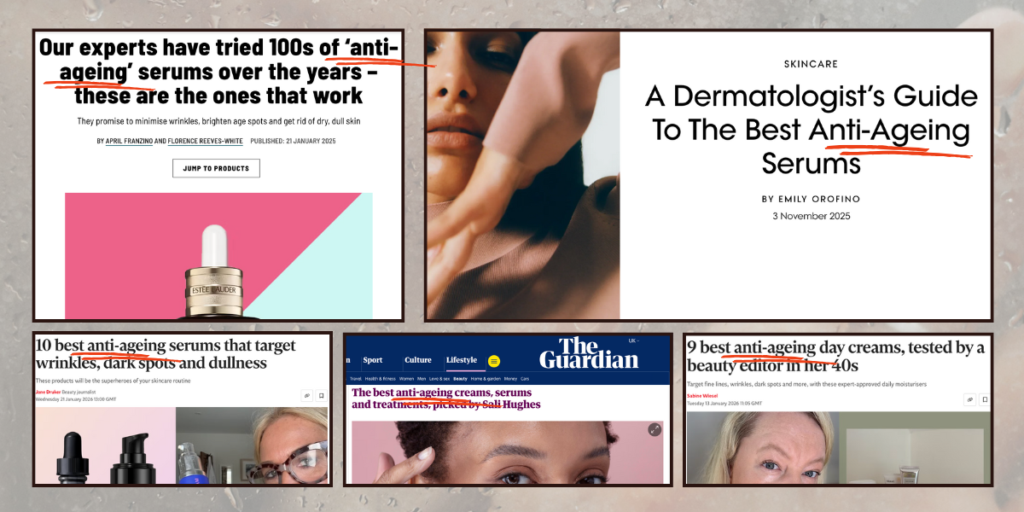
We’re only just beginning to question this narrative: “I disagree with that word anti-aging, everybody ages and it shouldn’t be looked upon negatively,” says technical specialist for the Soil Association, Emma Dawes, who also sits on the COSMOS technical committee and helped to create their international organic standards for beauty products.
The pursuit of anti-aging is a huge part of a beauty industry that makes infinite promises, with limited evidence and regulation. The problem isn’t the science, it’s that the science seems to be cherry-picked, with the light shone on a few hero ingredients and little discussion of all the other ingredients that make up the bulk of so many products.
“So, my personal view might be different to what the cosmetic industry or the Soil Association view could be, but I would say these ingredients have some functions, but maybe not as much as brands make out,” says Dawes, when referring to non-certified beauty and wellbeing products.
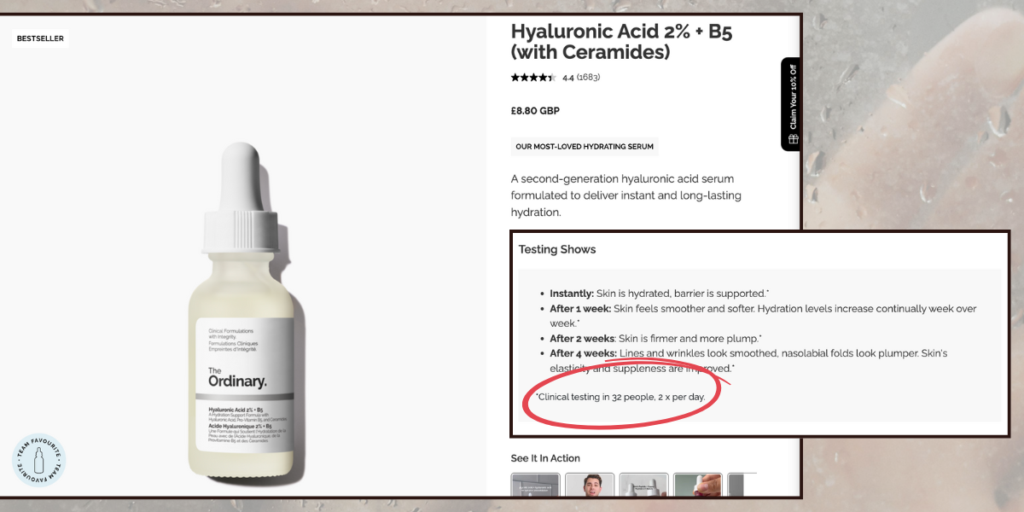
One of the most popular brands in the UK currently focusing on this narrative is The Ordinary, whose strapline is: “Grounded in science. Driven by purpose.” Their bestselling serum, Hyaluronic Acid 2% + B5 (with Ceramides) [2], for example, is proven to target signs of aging and claims to deliver instant and long-lasting hydration. Their testing shows results over four weeks – on 32 people.
The Ordinary’s recent ‘Periodic Fable’ [3] was a huge hit. It aims to dispel common beauty myths and claims about ‘overhyped’ ingredients.
“‘A scientific table with zero science’, as it says in its heading, is exactly what it is,” says chemist and skincare formulator of Neve’s Bees, Julie Macken. “It’s very clever marketing but it’s also faux-transparency and a smokescreen for all the ingredients they’re not talking explicitly about. I feel like that little boy shouting ‘But, the emperor’s got no clothes on!’ Why can’t anyone else see this?’.”
Rethinking skincare: questions we should ask
One answer to Macken’s question, of course, is money. The beauty industry is worth upwards of an estimated £330 billion a year [4]. In 2024, L’Oreal’s marketing budget alone was £14 billion [5]. That translates to millions for advertising in women’s magazines, with beauty editors and awards extolling the virtues of the biggest brands [6]. One social media influencer confides in me they can get upwards of £15,000 for a single post for marketing a product. By contrast, Neve’s Bees spent £14,000 on marketing in total last year. The biggest brand we spoke to for this article has an annual marketing budget of £140,000. They simply can’t afford to join, let alone influence, the conversation.
But, the more Live Frankly spoke to independent, natural beauty brands, the more we found them asking the same questions –
What if we’re slathering ourselves with products that contain ingredients that are causing our skin barrier harm as well as the ingredients that ‘repair’ it?
Are ingredients like hyaluronic acid initially drawing moisture to the skin but eventually leading to a cyclical pattern of dryness?
Could skincare be a lot more simple than having to read ingredients lists, download apps, or decipher periodic fables?
The answers to all these questions lay in having a better understanding of our skin, which can be achieved in three simple steps:
Step 1: Understand how the skin works.
This is the real science we need to understand. Very simply, our skin has multiple layers that work together to stop pathogens – bacteria, viruses, fungi, and parasites, pollutants and other stressors – from getting in and moisture from getting out (remember our bodies are about 60% water) [7].
Your skin’s exterior layer
Think of your skin as a house. Firstly, we have the outer layer, the epidermis, which comprises three parts:
The first part, the bricks. These are hardened, dead skin cells that have moved up from the layers below. They contain keratin, which helps to make them waterproof. They are not connected to the bloodstream; their role is to stop pathogens getting in and to stop water from getting out, which keeps your skin hydrated.
Then there’s the mortar. These are lipids and natural oils that provide a further sealant in the cracks between the bricks.
The third part is the exterior paint: The microbiome. Just like in our guts, there are trillions of bacteria (both ‘good’ and ‘bad’) that act as a frontline defense to prevent pathogens from even reaching the bricks and mortar.
Your skin’s interior layer
Then there’s the interior of the house. The inner layer of the skin is called the dermis. It is a matrix made up of collagen, elastin and blood vessels. It’s alive, connected to our bloodstream and soaks up water from it. Think of it like the plumbing. Remember, the outer layer is stopping as much as possible from getting in or out, so we maintain the inner layer best with what we eat and drink rather than what we put on our skin.
“This is why we believe applying products topically that contain Elastin or Collagen are pointless. These molecules are way too big to pass through the epidermis,” says Vicky Lyons of Lyonsleaf. “If you want more collagen, the most effective way is to eat foods that contain it.”
The case of Hyaluronic Acid is slightly more complicated. When it comes to beauty products, Hyaluronic Acid molecules come in different sizes, larger molecule versions will stay in the epidermis. The smallest can pass to the dermis and may help it retain water [8], although there is some debate about this.
“Hyaluronic Acid can plump the top layers of the skin by binding to water, smoothing the appearance of fine lines. But, because it doesn’t create moisture itself, if it’s applied to dry skin, used in low-humidity environments, or paired with irritating ingredients, it can draw water out of the skin leaving it feeling drier over time,” explains qualified skincare formulator Kelly Spinks from botanical skincare brand Husk and Seed.
“You can support natural production with diet and by staying out of the sun. This is why it’s important people understand good skincare is not only about the products you use, it’s also influenced by other other aspects of your life – diet, medication, stress, hormones. When it comes to skincare products, the goal is to try to reduce the toxic load and keep the microbiome and skin barrier as healthy as possible.”
Step 2: Understand what ‘moisturising’ actually is
This brings us to understanding the next step: moisturising.
Did you know that moisturising is not about ‘adding moisture’ to our skin? This is because only so much moisture can penetrate its layers. If more water could penetrate, we’d puff up like balloons in the bath. Moisturising is about protecting and repairing our skin’s barrier, so the moisture we have in our inner layer doesn’t evaporate. This is often referred to as ‘transepidermal water loss’.
Many skincare brands claim to include ingredients that protect and repair the skin’s barrier. But almost never do they mention that their products could also contain ingredients that may also be harming it.
Hidden ingredients in ultra-processed beauty products
One of the reasons for this is that water makes up somewhere between 60% to 80% of most creams and lotions, often listed first as ‘Aqua’ [9]. The issue isn’t the water necessarily, it’s all the other ingredients that have to be added because of the water.
What Macken finds especially frustrating is that it’s almost impossible for people to cut through the marketing and understand what they’re really putting on their skin. In total, The Ordinary’s Hyaluronic Acid 2% + B5 (with Ceramides) contains 23 ingredients. The main one is water and, according to Macken, another 14 are there to keep the water-mix stable. “Why doesn’t the ‘Periodic Fable’ explain the impact of these ingredients on the skin?” she asks. “If brands want to talk about science, let’s at least do it honestly.”
Preservatives, Emulsifiers and Stabilisers
Bacteria thrives in water so preservatives typically have to be added to beauty products that contain water. The impacts of preservatives are still being discovered, but so far Parabens have been found to mimic oestrogen in laboratory studies and questions remain about their long-term cumulative exposure [13] [14]. For some, that uncertainty is enough to seek alternatives.
Plus, when applied to skin, preservatives don’t differentiate between ‘good’ and ‘bad’ bacteria, so there’s a good chance they can compromise the skin’s microbiome [12]. Just like a healthy gut, a healthy skin microbiome is said to help your immune system and defend against inflammation, irritation, and conditions like eczema.
The microbiome can also be impacted by the emulsifiers that are required to blend oil and water and thickeners to create desirable textures. Other additives include fragrance stabilisers such as phthalates, which mimic human hormones and are linked to fertility issues, early puberty, and some cancers [15]. These “can and are likely to be derived from petrochemicals,” explains Dawes. They can interfere with natural oils and disrupt the barrier, leaving skin prone to dehydration and environmental stressors [16].
Macken shares her perspective: “The way I see it? A bottle of conventional cream or lotion contains only a small percentage of useful ingredients, a large percentage of irrelevant water, and a significant portion of potentially harmful emulsifiers, preservatives, and stabilisers.”
So, why use water?
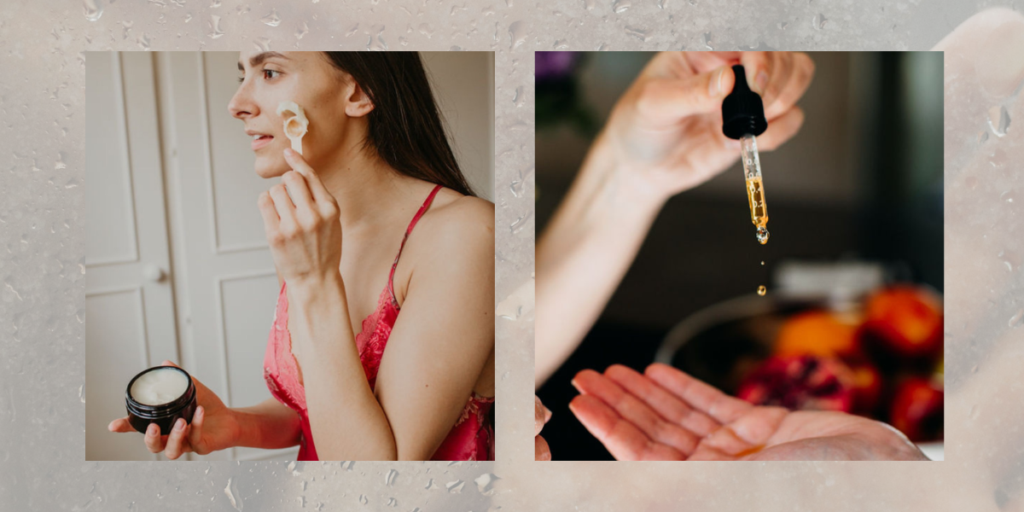
I spoke to two formulators about why they use water – Dr Henrike Neuhoff, chief scientific officer for Lavera, who also sits on NATRUE’s board of directors; and Nikhail Jain, a product cosmetic developer for organic brand Benecos. Both are brands listed on the Live Frankly Directory. They made arguments for water-based systems, particularly in stability and sensorial performance.
Jain affirms that water is necessary because: “common skincare ingredients work best when dissolved in water. This includes humectants like glycerin, panthenol, and hyaluronic acid, as well as certain vitamins, botanical extracts, and peptides. Without water, they may not function as effectively or evenly.”
Dr Neuhoff explains how Lavera’s products do not require preservatives because of how they are formulated. For her, the more pressing issue with conventional skincare is the use of synthetic rather than natural ingredients as opposed to the inclusion of water. She maintains naturally-derived ingredients function better with the skin and “cooperate” with the body. In contrast, ingredients like silicone form a layer on the skin, which avoid transepidermal water loss and provide a pleasant feel, but do not foster “care” in the long-term.
I sit with this for days and ultimately see the crux of the issue as this: water is used to create the creams, lotions and serums that so many enjoy using. I gifted my mum, who is a great lover of lotions and potions, a selection of organic creams and oils, and one of the creams was her favourite moisturiser. She tells me she likes the thick texture and the smell of the fragrance. I have no doubt she also has an inherent trust of, and emotional tie to, this beautiful cream in its beautiful pot because of her exposure to advertising and marketing over the years – magazines are a shared love for us.
As with food, there is a whole spectrum of skincare from natural to ultra-processed. Options range from minimally-processed water-free products; to organic products that contain water but mainly more gentle and naturally-derived preservatives, emulsifiers and stabilisers; to popular conventional products that are selling a whole concoction of synthetic ingredients.
Ultimately, many beauty products are sold to make us feel we’re doing ‘good’, whether that’s true or not. It’s often hard to tell the difference between their effectiveness, and most of us don’t read beyond the marketing spiel. We don’t think about the potential long-term impacts some of the less talked-about ingredients might have – and there doesn’t seem to be enough investment from brands to find out.
In the absence of that, maybe we should consider erring on the side of caution and opting for natural products that have minimal and recognisable ingredients in them – as is the recommendation when it comes to Ultra-Processed Food. We should reframe the purpose of the products we’re putting on our skin not to stop it from aging, but to protect it, and, as such, truly prioritise skin “care”.
Step 3: Consider water-free skincare products.
If your skin constantly dries out or breaks out, no matter how religiously you stick to your skin routine, then the problem could be your ultra-processed skincare products. Not you or your skin.
At this point, we could list ingredients to avoid but we’ve done that before. Let’s be honest, it’s a long list and deciphering ingredients listed on creams pretty much requires a chemistry degree.
So what if, instead of reading labels, there was a simpler option? Given the preservative load, formulation complexity and skin barrier considerations, water-free systems appear to offer significant advantages. Naturally, water-free products also require careful formulation to prevent oxidation or contamination – and not all water-free products are made equal.
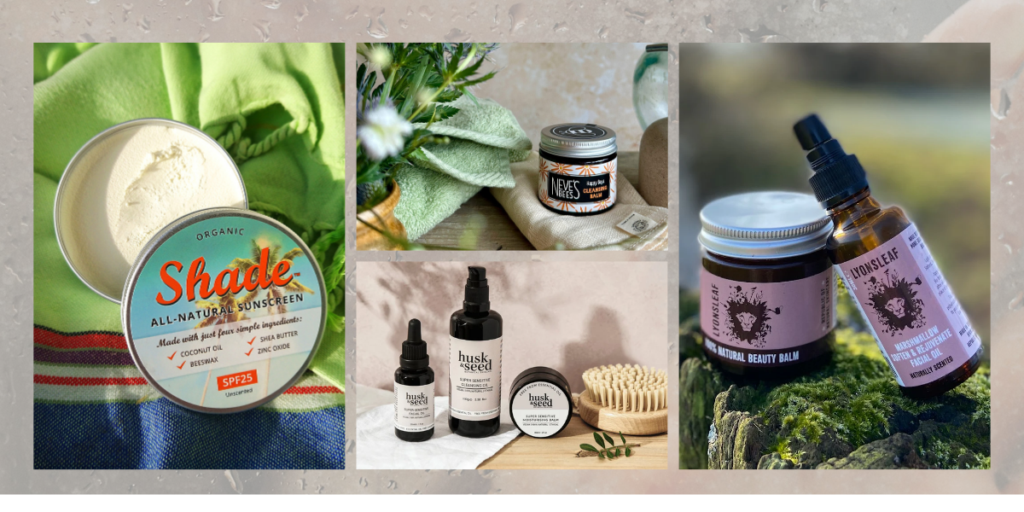
When it comes to water-free moisturisers and sunscreen, this usually means choosing a balm, salve or oil rather than a cream or lotion.
“We chose to make a completely water-free sunscreen because it allowed us to remove entire categories of unnecessary ingredients,” says Tania Wedin, founder of Shade All-Natural Sunscreen, which is made from only four ingredients. “Sunscreen should reinforce the barrier, not fight against it. If a sunscreen is full of ingredients that disrupt the microbiome or strips natural oils, it undermines the very defence system it’s supposed to support.”
Of course, not all balms are created equal. That small tin of Vaseline you might use on your lips is technically a balm – but it’s derived from petroleum. Mineral oils are effectively inert. While they do provide a pleasant feel and an effective barrier for the skin, they do not provide the additional phytonutrients found in plant-derived oils.
What you ideally want is a balm that is made from natural ingredients such as plant oils, natural beeswax or plant waxes, mineral powders, herbal extracts because they are nourishing and help to repair and maintain your skin’s protective barrier.
The story from small, independent brands challenging the dominant beauty industry is the same time and time again – every ingredient is included because it genuinely benefits your skin.
“I don’t leave the house without make-up, skincare is a big thing for me. I was spending £300-£400 a month on the likes of Kiehl’s before I switched to Husk and Seed. I was dubious at first because I have oily skin that is prone to breakouts. I had breakouts through the switch, but within a month everything had changed. My skin now looks glowing in a good way. I read the monthly newsletters and follow their advice. I still battle with my weight but am more conscious of what I eat and can see the difference. I also drink a lot more water than I’ve ever done. I started to like the way I look and everything else started to fall into place. You can’t have better proof than when people ask: “What are you doing differently?”
Teresa Dedridge, 44, Kent
The testimonials from customers back this up. Of course, individual experiences vary and these products are not medicines, but it’s not an exaggeration to say that Lyonsleaf has hundreds of reviews from people who suffer from skin complaints, including eczema and psoriasis, saying how it has helped them. Neve’s Bees, Husk and Seed, Shade All Natural suncream all have similar.
Caitlin Burns, 30, a practice nurse, developed Periorificial Dermatitis around her mouth due to the medication she needed for Crohn’s disease. “I tried for months to get rid of it and was so self conscious I even started wearing a mask at work to hide it,” she says. “By luck, I found Lyonsleaf which was developed for skin conditions like mine and bought the skin rescue sample bundle. The zinc dried up all the spots and the marshmallow root gave the right amount of hydration. I am three weeks in and have ditched the mask. I feel so much more confident and cannot believe it has cleared up to what it has so quickly.”
Martha, 35, has been using Shade All-Natural Sunscreen on her daughter for the past four years, since she was five-years-old, because “it is the only product that doesn’t bring her out in hives”.
Emma, 50, first tried Neve’s Bees moisturising balm because she had become self-conscious due to rosacea brought on by the menopause; two years later and she hasn’t looked back.
An Optional Step: Ignore the Marketing
The question is, are we really looking for skincare that truly cares for our skin? Or are we looking for something that we know can’t really be found in a bottle? We are hit with messages every day telling us we should look younger, smoother, firmer – and less like ourselves. No matter how healthy our skin barrier is, it’s rarely thick enough to block out the suggestion that we’re not quite good enough as we are. If women have any ‘duty’, surely it’s to remind ourselves, and each other, that we absolutely are.
Funding Transparency
Live Frankly doesn’t take traditional advertising. This article is part of an ultra-processed beauty campaign we’re launching. Neve’s Bees, Lyonsleaf, Husk & Seed and Shade All-Natural Sunscreen are contributing financially to help make reporting possible. Brands review factual details only, they don’t influence the story. The decision to focus on water-free systems reflects the editorial view formed after multiple interviews with both water-based and water-free formulators.
REFERENCES
[1] https://www.theguardian.com/books/2003/apr/05/featuresreviews.guardianreview5
[2] https://theordinary.com/en-gb/hyaluronic-acid-2-b5-serum-with-ceramides-100637.html
[3] https://theordinary.com/en-us/the-periodic-fable.html#/table
[4] https://www.mckinsey.com/industries/consumer-packaged-goods/our-insights/state-of-beauty
[5] https://www.loreal-finance.com/eng/2024-universal-registration-document/en/article/40/
[6]
Allure Best of Beauty https://www.allure.com/best-of-beauty-2024-winners
The Cosmopolitan Readers’ Choice Beauty Awards 2025 https://www.cosmopolitan.com/uk/beauty-hair/a63897765/cosmopolitan-readers-choice-awards-2025/
ELLE International Beauty Awards https://elleinternationalbeautyawards.com/2025-winners/
Marie Claire UK Skin Awards – Targeted Treatments https://www.marieclaire.co.uk/beauty/skincare/targeted-treatments-marie-claire-uk-skin-awards-2025?utm_source=chatgpt.com
[7] https://nevesbees.co.uk/what-is-a-moisturiser/ and https://lyonsleaf.co.uk/pages/how-your-skin-works
[8] https://pubmed.ncbi.nlm.nih.gov/25877232/
[10] https://www.thameswater.co.uk/media-library/4gvnsten/wholesale-tariff-document-2025-26.pdf
[11] https://inky-ingredients.com/
[12] https://pubmed.ncbi.nlm.nih.gov/30548758/
[13] https://www.sciencedirect.com/science/article/abs/pii/S0048969719351083
[14] https://pubmed.ncbi.nlm.nih.gov/36746253/
[16] https://www.sciencefocus.com/news/skin-microbiome-beauty-products
All last accessed between 27 and 29 December 2025
About the author